DDP Annual Report 2025

A Decade of National Climate Action:
Stocktake And The Road Ahead

Ten years on from the Paris Agreement the report “A Decade of National Climate Action: Stocktake and the Road Ahead” analyzes what has been the real effect of the Paris Agreement on climate action.

Complementarily to globalheadlines, the report is grounded on a detailed analysis of climate action at the national level from DDP experts across 21 countries, representing a diversity of geographies, levels of development, and sizes (ArgentinaBrazilCanadaChinaCosta RicaCôte d’IvoireDominican RepublicFranceEUGermanyGuatemala, India, Indonesia, Japan, Kazakhstan, Mexico, Nigeria, Senegal, South Africa, Thailand, United States).

The analysis reveals that the Paris Agreement has had a real impact, changing the way countries think and act and spurring new approaches to climate governance and policy in countries.
At the same time, the report also highlights shortcomings that explain why global trends are still off track and identifies priorities for future action to accelerate national transitions in the coming decade.

These lessons can guide national decisions and serve as a compass for international processes which can support stronger coordination mechanisms suited to help accelerate the needed transformations towards the long-term goals of the Paris Agreement.

Chapters

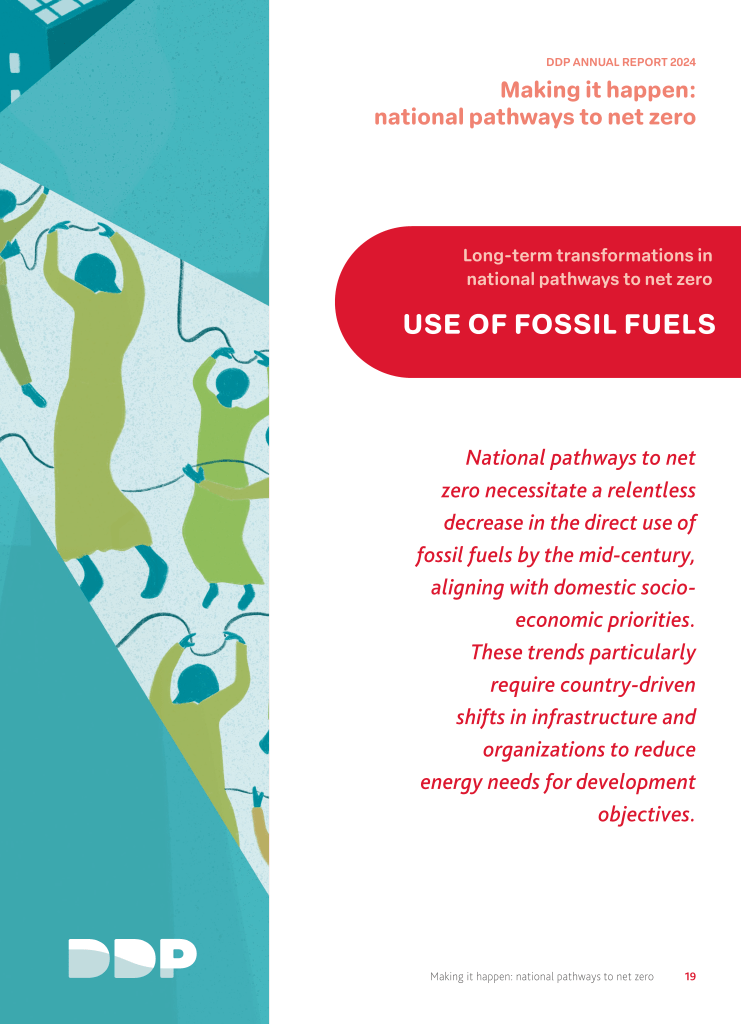
Use of Fossil Fuels

National pathways to net zero necessitate a relentless decrease in the direct use of fossil fuels by the mid-century, aligning with domestic socio-economic priorities.
These trends particularly require country-driven shifts in infrastructure and organizations to reduce energy needs for development objectives.

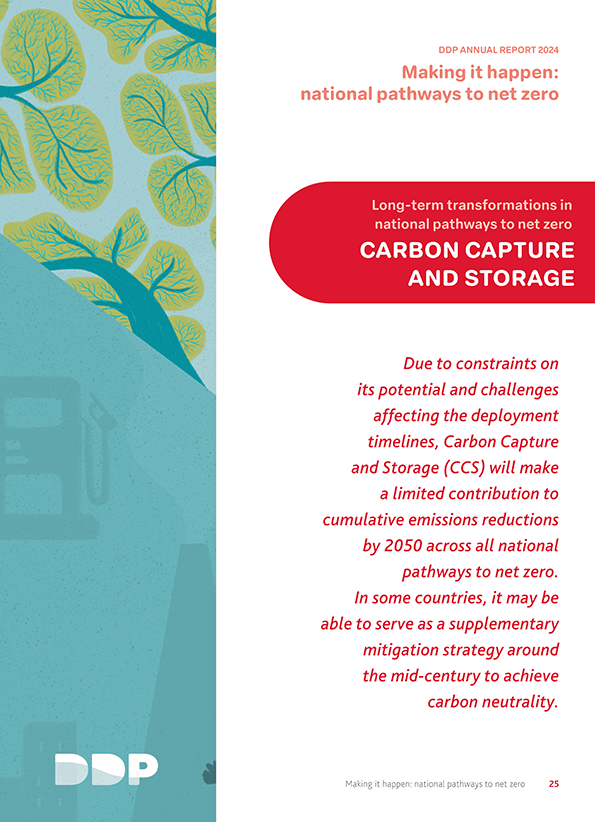
Carbon Capture and Storage (CCS)

Due to constraints on its potential and challenges affecting the deployment timelines, Carbon Capture and Storage (CCS) will make a limited contribution to cumulative emissions reductions by 2050 across all national pathways to net zero. In some countries, it may be able to serve as a supplementary mitigation strategy around mid century to achieve carbon neutrality.

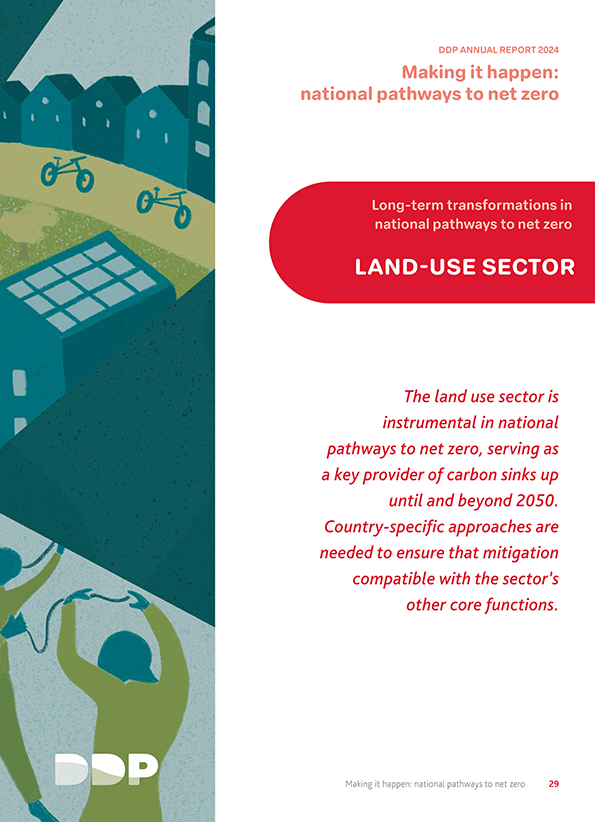
Land-use sector

The land use sector is instrumental in national pathways to net zero, serving as a key provider of carbon sinks up until and beyond 2050. Country-specific approaches are needed to ensure that mitigation compatible with the sector’s other core functions

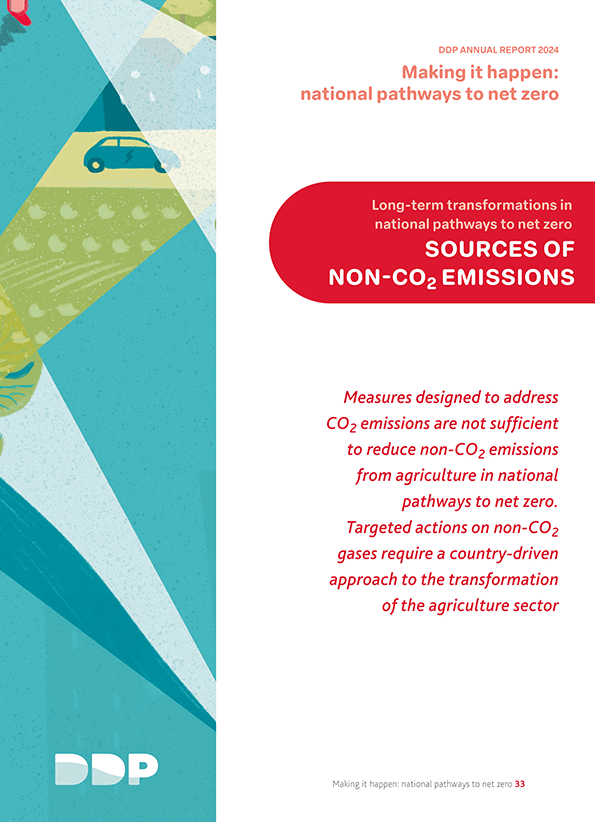
Sources of non-CO2 emissions

Measures designed to address CO2 emissions are not sufficient to reduce non-CO2 emissions from agriculture in national pathways to net zero. Targeted actions on non-CO2 gases require a country-driven approach to the transformation of the agriculture sector

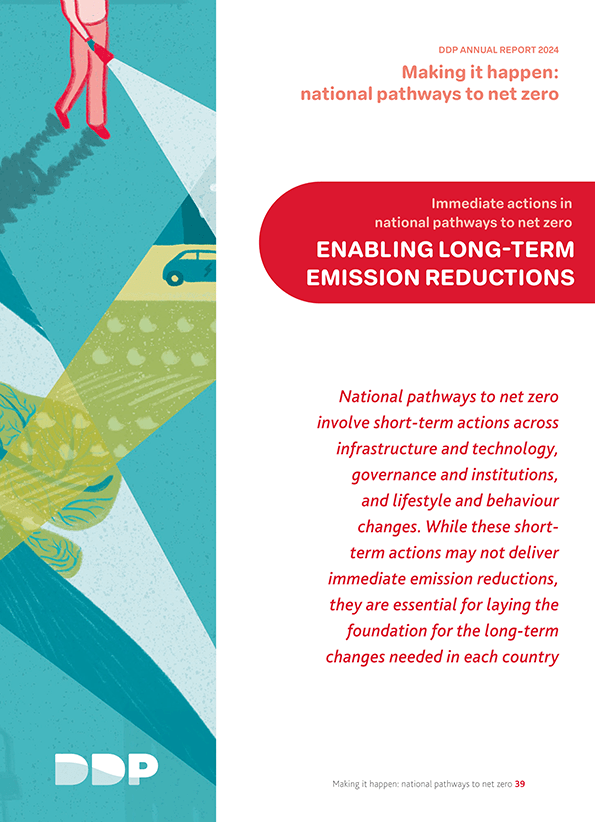
Enabling long-term emission reductions

National pathways to net zero involve short-term actions across infrastructure and technology, governance and institutions, and lifestyle and behaviour changes. While these shortterm actions may not deliver immediate emission reductions, they are essential for laying the foundation for the long-term changes needed in each country.

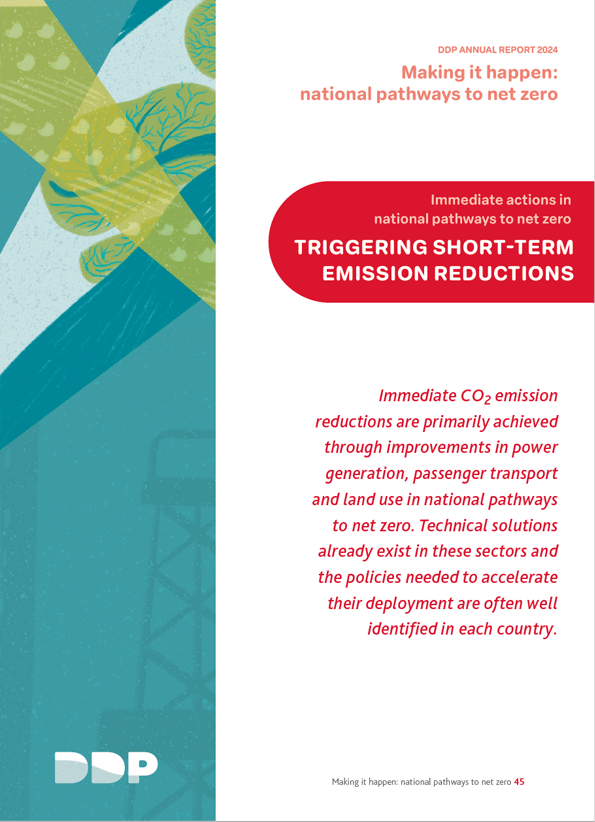
Triggering short-term emission reductions

Immediate CO2 emission reductions are primarily achieved through improvements in power generation, passenger transport and land use in national pathways to net zero. Technical solutions already exist in these sectors and the policies needed to accelerate their deployment are often well identified in each country.

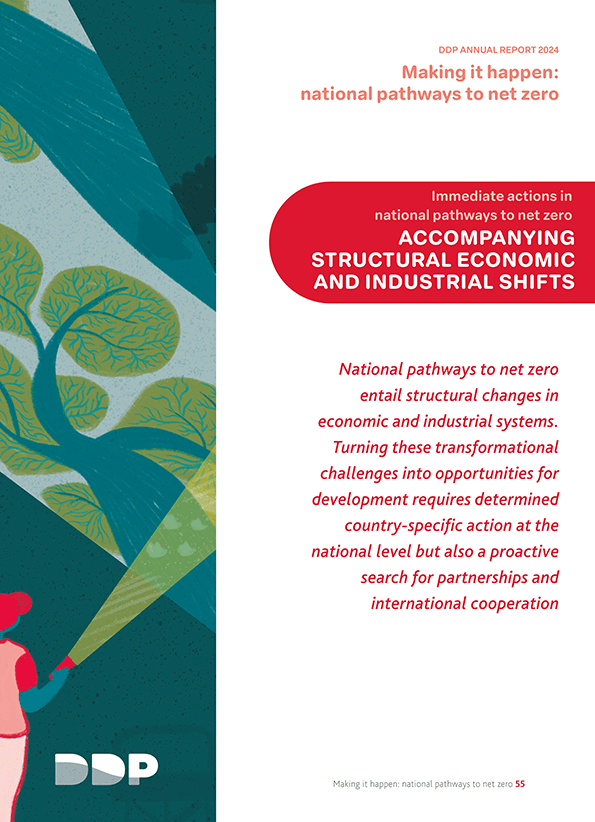
Accompanying structural economic and industrial shifts

National pathways to net zero entail structural changes in economic and industrial systems. Turning these transformational challenges into opportunities for development requires determined country-specific action at the national level but also a proactive search for partnerships and international cooperation.

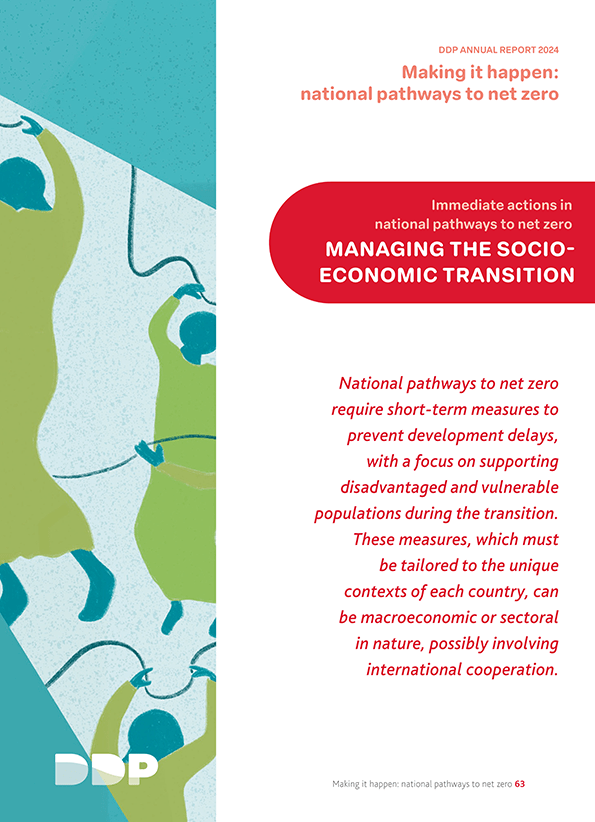
Managing the socio-economic transition

National pathways to net zero require short-term measures to prevent development delays, with a focus on supporting disadvantaged and vulnerable populations during the transition. These measures, which must be tailored to the unique contexts of each country, can be macroeconomic or sectoral in nature, possibly involving international cooperation.

Complementary material

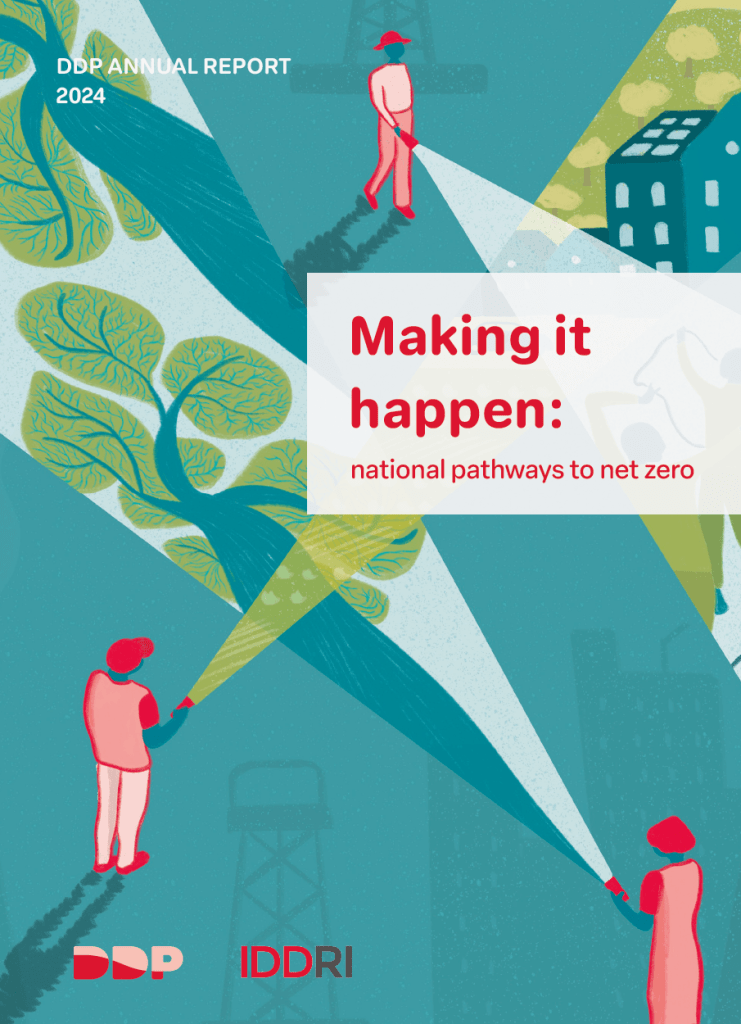
These complementary materials on the DDP Annual Report 2024 offer additional national scenario data from various countries, which support the insights and conclusions presented in the full report. These scenarios provide country-specific pathways to achieving net-zero emissions while considering local economic and social contexts.

Subscribe to the latest DDP updates

* indicates required