Argentina

Key in-country partners

Francisco Lallana
Researcher and professor specialized in electricity economics and energy modeling
Gustavo Nadal
Senior Researcher and lecturer in resource and technology assessment, identification of barriers and opportunities for renewable energy penetration, formulation of recommendations and guidelines for energy and environmental policies
Marina Recalde
Researcher at Fundación Bariloche & Independent Researcher of the National Council of Science and Technology (CONICET)
Ignacio Sagardoy
Researcher at Fundación Bariloche & Environmental Engineer

Latest DDP Scenario

DDP IMAGINE

Notes: these Scenarios are designed to evaluate the energy-environmental-economic impacts of a Natural Gas Strategy (for which Argentina has huge reserves) and more ambitious DDP strategies based on a differential cooperation world.

  1. Sce I BAU/CPSAt the national level, this Scenario includes ongoing actions in the energy sector, a Current Policies Scenario. It proposes the historical trajectory of natural gas (NG) production and projected exports, mainly through regional pipelines and one already projected liquefaction plant for LNG exports.
  2. Sce II: Natural Gas Exports. This is a Scenario in which Natural Gas, especially Non-Conventional Natural Gas plays a key role in the medium term. There is an increase in the exploitation of non-conventional Natural Gas fields, mainly for export purposes, and its rents are used to finance the Energy Transition in the medium / long term. Natural Gas domestic consumption decreases to the end of the period. The decarbonization ambition of this Scenario is a bit higher than the BAU Scenario, particularly in the power sector, but this is not yet a Paris compatible Scenario.
  3. Sce III: Natural Gas reduction without international cooperation. This Scenario is built in a context of reduced international cooperation and technology transfer and also with high environmental commitments.
    The decarbonization ambition of this Scenario is higher, in terms of the speed of fossil fuels phase out (specially NG) in power generation and final consumption sectors. The natural gas exports reduce in the short term (opposite to Scenario 2), and so do the rents to finance the energy transition. No additional international support is simulated.
  4. Sce IV: Energy Green Exports Scenario. This Scenario is an ambitious decarbonization scenario built in an international cooperation context. We evaluate the production and export of green products, mainly Green Ammonia. International cooperation is simulated by a reduction in the discount rate used for the evaluation of the energy investments. Regarding decarbonization measures, this scenario includes fuel substitution in end-use sectors and power sector (specially wind and solar). For instance: a reduction in the consumption of petroleum derivatives and natural gas consumption, a strong increase in electrification and in the use of biomass, increase in the use of biomass and waste in industry, strong energy efficiency actions, electricity penetration in transport policies.

In country partners

It seems we can’t find what you’re looking for.

International partners & funders

Fondacion Bariloche

HIGHLIGHTS

National policy work

DDP Argentina and related projects have contributed to:

The work provides the country’s governments and research institutes and other relevant stakeholders with tools to:

  • Design and strengthen long-term strategies in line with national development goals.
  • Align short- and medium-term sectoral, economic and national development plans with long-term strategies, including the need for a just transition. Particularly for the Energy Sector and the links with the Productive System, and respective trends.
  • Identify opportunities to improve nationally determined contributions based on the long-term strategy.

Contribute to the Global Stocktake 2023 by synthesizing available knowledge and producing new assessments that help identify opportunities to accelerate national and global climate action in ways that can inform the GS process and build on its findings to support increased collective ambition to achieve the Paris agreement. DDP work feeds an ongoing national interactive and participatory process, coordinated by the NCC Cabinet, SAyDS of Argentina. The purpose of this Extended Roundtables is to inform civil society on the progress of the National Climate Change Adaptation and Mitigation Plan (PNAyMCC) and the Long Term Low Emissions Resilient Development Strategy (ELP), sharing progress in terms of the inputs that make up the national climate policy to be presented at the COPs and to receive suggestions, input and information.

Key projects

ENGAGEMENT ACTIVITIES

-

|

Meeting

2025

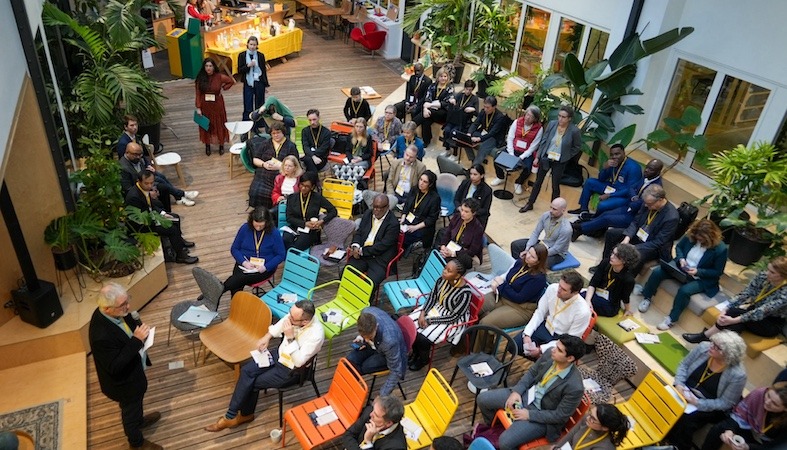
Participation in the REN21 Steering Committee Meeting

Ignacio Sagardoy from Fundación Bariloche joined colleagues from around the world to take part in the Steering Committee meeting of REN21

Read more

Subscribe to the latest DDP updates

* indicates required